Draw Media
News / Iraq

Israeli researcher Elizabeth Tsurkov disappears in Baghdad: Iraq source

The prominent Israeli commentator on the foreign-led war on Syria was allegedly kidnapped on 26 March in Iraq's capital The Cradle Elizabeth Tsurkov, a prominent Israeli researcher and writer on Syrian affairs, disappeared this past March in Baghdad during a visit to Iraq, The Cradle has learned. Her whereabouts are currently unknown. Tsurkov, a former Israeli soldier, became well known for her reporting and commentary during the US-led war against Syria that began in 2011. An active user of Twitter, Tsurkov has not posted to the social media site since March 21. Despite this abrupt silence, no reports have previously emerged in the western press citing her possible disappearance. Tsurkov is currently listed as a non-resident fellow at the Washington, DC based Newlines Institute. The Cradle contacted Newlines for comment on Tsurkov’s disappearance but did not receive a response. Tsurkov was first rumored to have disappeared while in the southern Iraqi city of Basra. However, information obtained by The Cradle indicates that "she was kidnapped from a house in the Karrada neighborhood of Baghdad on 26 March." However, senior Iraqi security sources told The Cradle that Tsurkov's kidnappers "were dressed in official Iraqi security service uniforms." Since then, no information about her whereabouts or who may be holding her has emerged. In the first days after her abduction, news spread in the Iraqi capital about "the kidnapping of a Russian woman, who holds American citizenship,” in a possible reference to Tsurkov. An Iraqi source says Tsurkov is not a US citizen, but holds dual Israeli-Russian citizenship. The early report in Iraq also claimed that the unnamed woman - who may or may not have been Tsurkov - was kidnapped by an Iranian citizen who was arrested by Iraqi security forces. Iraqi official sources have denied to The Cradle the allegation that an Iranian was detained over this matter. Tsurkov entered Iraq on a Russian passport, according to high-ranking Iraqi security sources, and first visited the Kurdistan region of Iraq, before moving on to Baghdad. But the Russian embassy in Baghdad told The Cradle in an email that it has "no evidence about the individual mentioned in your request neither about her nationality nor her story in Iraq." Iraq's Interior Minister Lieutenant General Abdul Amir al-Shammari was contacted for comment on Tsurkov's disappearance, but did not respond to the request. Iraqi security officials usually authorized to make public statements also refused to comment on the matter. Tsurkov, who speaks English, Hebrew, Russian, and Arabic, is well known to observers of the 2011 US-led covert war on Syria. Her reporting relied on her close personal contacts with opposition activists and commanders of foreign-backed extremist groups fighting against the Syrian government, including the Free Syrian Army (FSA) and the Al-Qaeda affiliated Nusra Front, later known as Hayat Tahrir al-Sham (HTS). Tsurkov's commentary on Syria has promoted regime change and parroted US and Israeli propaganda about the conflict, portraying foreign-backed extremist groups as "moderate rebels." Tsurkov dismissed claims of Israel's direct support for the Syrian insurgency and efforts to topple the Syrian government, despite admissions from Israeli officials that they wished to topple Bashar al-Assad’s government from the beginning of the war in 2011, as reported by the Jerusalem Post, and admissions that the Israeli army was supporting the Nusra Front, as reported by the Wall Street Journal. Tsurkov took this stance despite admissions by opposition activists that the Israeli air force was actively bombing the Syrian army on behalf of the Nusra Front. But once Israeli support for the Nusra Front and other groups became widely known, Tsurkov wrote her own report detailing Israeli activity in this regard. Tsurkov regularly justifies the Israeli attacks on Syrian territory, while defending the legitimacy of the US sanctions on Syria. Her current employer, the Newlines Institute, was founded by Ahmed Alwani, who was vice president of the International Institute of Islamic Thought (IIIT), which has links to the Muslim Brotherhood. In 2006, the Muslim Brotherhood began partnering with neoconservatives from the George W. Bush Administration to plan for regime change in Syria. As reported previously, the leadership of Newlines Institute includes former US State Department officials, US military advisors, and intelligence professionals. acknowledges her service in the Israeli army during its war on Lebanon in 2006.

Read more

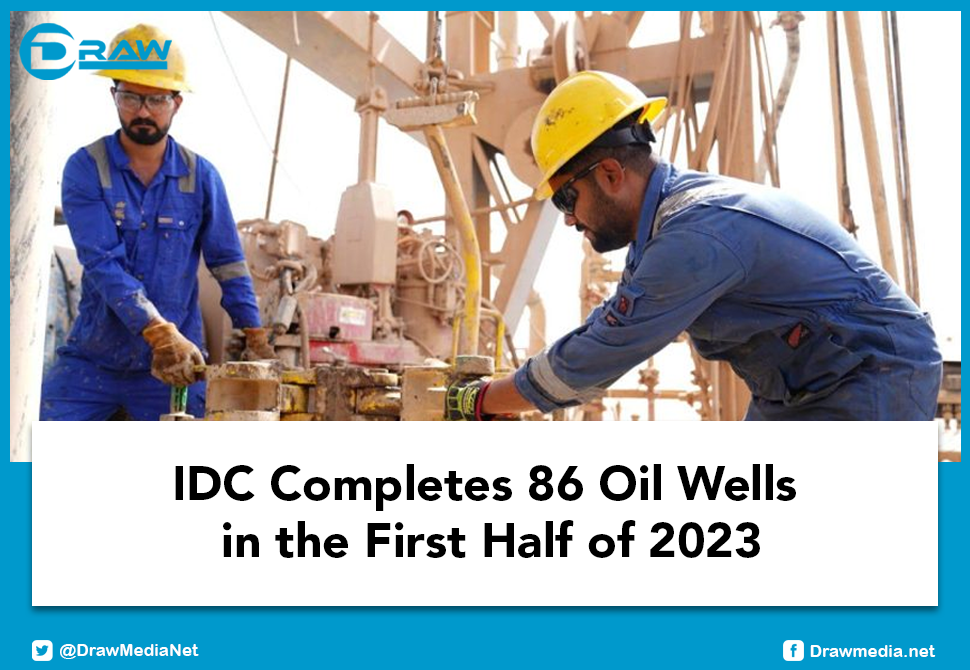
IDC Completes 86 Oil Wells in the First Half of 2023

The Iraqi Drilling Company (IDC) drilled and repaired 86 oil wells in the first half of this year. Engineer Khalid Hamza Abbas, Director General of the Iraqi Drilling Company, said that in the first half of this year, the company's technical and engineering teams were able to drill 34 oil wells and carry out repairs in 52 other wells. The works are being completed in 10 projects by national oil companies and foreign companies operating in Iraq, divided into fields in northern, central and southern Iraq. "Our company has completed the drilling of MJ-152 oil well to a depth of 3079 meters, as part of a contract with Basra Oil Company to drill 43 wells in the Majnoon field in collaboration with Halliburton to provide oil services," he said.  He said the drilling process is carried out through the latest drilling equipment (IDC - 56) with a capacity of (2000) horsepower.

Read more

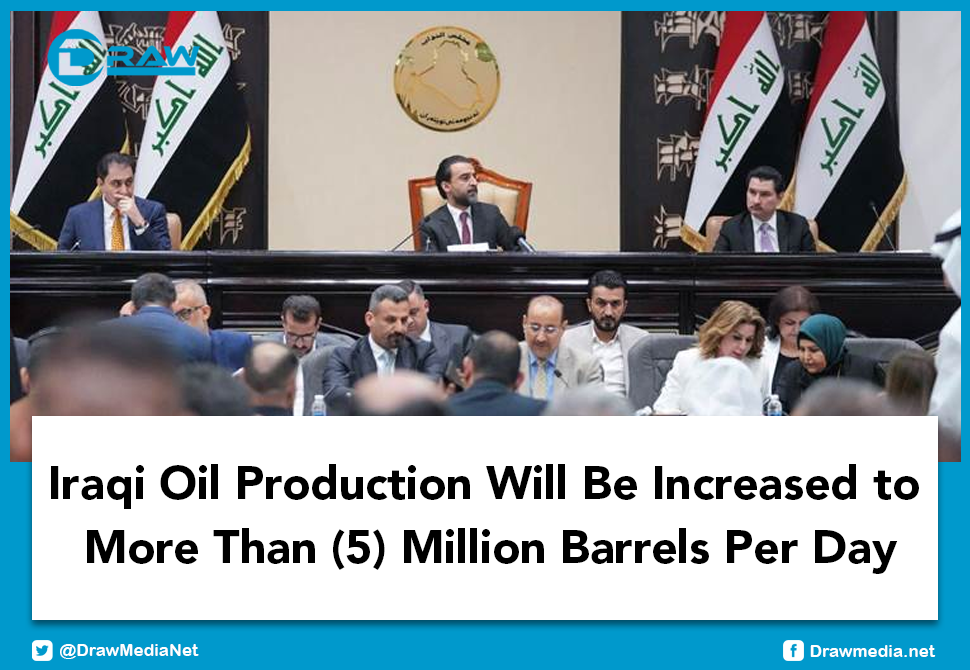
"Oil production will be increased to more than (5) million barrels per day"

Draw Media ?The Oil, Gas and Natural Resources Committee of the Iraqi Parliament, said: The government plans to increase oil production to more than five million per day. ?Zainab Juma, a member of the committee told the Iraqi News Agency: The Oil and Gas Committee, supports the government's steps to increase oil and gas production, by inviting international companies. ?Emphasize on providing a favorable environment for investment and providing protection and facilitation for oil and gas investment companies. ?Since the beginning of this year, about (54%) of Iraqi oil has been sent to India, China and South Korea, in addition to oil exports to Singapore, Netherlands, Turkey, Greece, Egypt, United States, Italy and France.

Read more

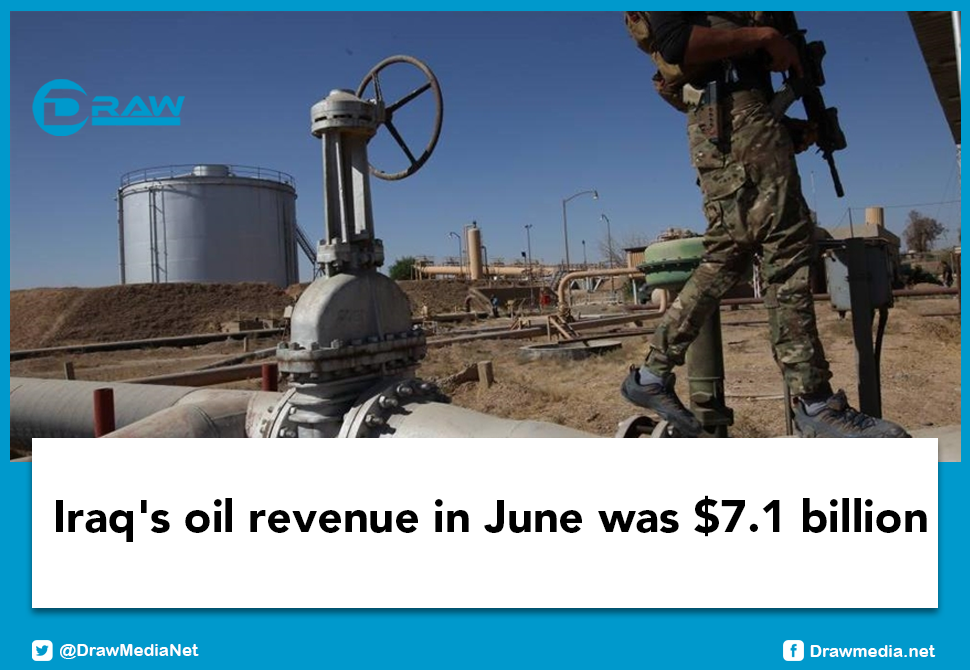
Iraq's oil revenue in June was $7.1 billion

?Iraqi Oil Ministry announces June oil revenues: ? Last month's oil revenue reached (7 billion 115 million) dollars. ? The amount of oil exports (100 million 59 thousand 52) barrels. ? The average daily oil exports were 3 million 335 thousand barrels. ? The average price has reached more than (71.11) dollars per barrel.   ?Iraqi Oil Ministry announced May oil revenues: ? Oil revenue last month reached (7 billion 306 million) dollars. ? The amount of oil exports (102 million 436 thousand 387) barrels. ? The average daily oil exports were 3 million 305 thousand barrels. ? The average price has reached more than (71.3) dollars per barrel.   ?Iraqi Oil Ministry announced April oil revenues: ? Oil revenue last month reached (7 billion 796 million) dollars. ? The amount of oil exports (98 million 634 thousand 947) barrels. ? The average daily oil exports were 3 million 288 thousand barrels. ? The average price has reached more than (79) dollars per barrel.

Read more

Prime Minister's directives on the press facilitation package come into force

The Prime Minister's Office directed all ministries and governorates, and all entities and bodies not associated with ministries, to implement the package of facilities for press work, announced by Prime Minister Mohamed Shia Al-Sudani yesterday. It is noteworthy that Prime Minister Mohammed Shia Al-Sudani directed the issuance of a package of measures and directives that must be implemented in support of Iraqi journalists and media institutions, on the occasion of the 154th National Day of the Iraqi press. The Prime Minister's Media Office said in a statement received by the Iraqi News Agency (INA) that "the Prime Minister directed all ministries, governorates and bodies not associated with a ministry to overcome obstacles and provide the necessary facilities for press and media cadres who have an official license from the Media and Communications Commission, in line with the law." The Prime Minister also directed the concerned authorities to "provide media institutions with Internet service at subsidized prices, as well as to reconsider the financial transfers of the media with regard to (satellites) for media channels and offices, in order to serve the media reality in Iraq, in accordance with the Central Bank of Iraq Law and instructions for controlling external transfer." In order to facilitate the procedures for the movement of press and media cadres who have an official license, the Prime Minister directed all checkpoints and security detachments stationed between all governorates to "implement this," instructing to "provide the necessary facilities and deal more smoothly for the passage of cadres of journalists and employees of media offices and their special equipment at Iraqi airports, as well as facilitating the granting of entry visas to journalists working in media offices and channels and facilitating their residency procedures in Iraq, based on the Foreigners' Residence Law No. (76) of 2017." In the field of continuous support, the Prime Minister directed, according to the statement, to "facilitate the completion of social security transactions for press cadres working in various media institutions," directing to "reconsider the fees of water and electricity imposed on media channels and offices, as well as generator fuel wages."

Read more

"Iran does not allow Iraq to benefit from its gas resources"

?Iran does not allow Iraq to benefit from its gas resources ?Tehran's obstacles have reached the level of threatening Iraqi officials Draw Media According to Middle East Newspaper, the visit of the Emir of Qatar is part of Iraq's efforts to take advantage of its gas resources, but the important question is, Iran will allow Iraq to do so? ?Baghdad can not enter the global gas market, due to Iranian obstacles, which has reached the level of threatening Iraqi officials not to activate the investment case in this sector, so that Iraq continues to need Iranian gas. ?Iraq has only one opportunity to benefit from Qatar, which is to gain expertise in the global gas market and mechanisms of gas extraction and production.

Read more

Investment in gas will return Qatar strongly to Iraq

Doha's steps serve US agendas and keep Iraq away from Iran, and the arrival of Qatari companies in Iraq is a great support for the Sudani's government. According to Shafaq News, the change in Qatar's policy towards Iraq comes after the strong entry of Qataris to participate in the contract of the French company "Total Energy", which is estimated at (27) billion dollars. Qatar's Emir, Sheikh Tamim bin Hamad Al Thani, announced today his country's plans to invest five billion dollars in various sectors in Iraq over the coming years. The announcement was made during the Emir's official visit to Baghdad, where several memorandums of understanding were signed to boost cooperation in energy and investment projects. The visit also witnessed the signing of agreements with Qatari private sector entities, focusing on areas such as energy, electricity, and the management of hotels and hospitals. These agreements aim to strengthen economic ties between Qatar and Iraq further. The discussions during the visit also touched upon initiatives to enhance regional economic relations. One notable initiative includes supporting the development of the electricity network interconnection in the Gulf and its connection with the southern Iraqi network. The Emir's visit and the commitment to significant investments underscore the growing economic partnership between Qatar and Iraq, paving the way for increased cooperation and development in various sectors of mutual interest.

Read more

Iraq's budget reflects the shortsighted political mentality of the authorities

The record $153 billion budget bill was facilitated by an earlier deal between Baghdad and Erbil that gives the federal government the power to monitor and audit the KRG’s oil and gas income. The budget bill reflects the politically short-termist mentality of the ruling State Administration Coalition as well as the staying power and political influence of Iraq’s militias. After a three-month delay, following the Iraqi Council of Ministers’ approval of the federal budget bill on March 13, the Iraqi parliament finally passed this critical legislation on June 11. The record $153 billion budget is based on a price of $70 per barrel and total Iraqi daily exports of 3.5 million barrels of oil (bpd), including 400,000 bpd of exports from the Kurdistan Regional Government (KRG). The budget bill remains valid through 2025 but will be subject to amendments in the following two years to take into consideration potential changes in global oil prices. Agreement on the budget bill was facilitated by a deal between Baghdad and Erbil that handed the central government the power to monitor and audit the KRG’s income from its oil and natural gas resources. This accord, in turn, came out following the International Chamber of Commerce’s (ICC) ruling last March in favor of the Government of Iraq in its nine-year arbitration case against Turkey over KRG exports to Iraq. In particular, the ICC’s decision gave the coup de grace to the KRG’s independent production and export of its oil and gas. There are three important takeaways from the just-adopted budget bill: First, it reflects the short-termist mentality of the de facto governing party of Iraq, the State Administration Coalition (SAC), of which Iraqi Prime Minister Mohammed Shia’ al-Sudani is a member. The budget aims to buy time and patience from Iraqi voters by adding hundreds of thousands full-time and temporary staff and contractors to the public sector, thereby increasing public wage spending, including salaries and pensions, by $58 billion — running counter to recommendations by the International Monetary Fund and many Iraqi economists who have been calling for a tighter fiscal policy. As one economist told this author last month in Baghdad, this is a “public employment budget” and not an “investment budget.” Out of the $153 billion, only $37.9 billion is reserved for investments, including infrastructure projects. Second, the budget reflects the staying power of the Popular Mobilization Forces (PMF). Namely, the bill includes a major expansion of PMF personnel, though it is not clear yet by how much. Reported estimates span the range of a 20-95% increase in the PMF ranks from the last reported figure of 170,000 in the 2021 budget. It is worth comparing that to the more modest reported increases in the Ministry of Defense (6%) and Ministry of Interior personnel (3%). The PMF militant groups are essential players in furthering the SAC’s agenda to consolidate power and long-term control over Iraqi politics. And finally, it is not clear yet how the passage of the budget bill — or the intra-SAC negotiations with the two main Kurdish parties leading up to it — facilitates or hinders the Iraqi prime minister’s promise to pass a federal oil and gas law during his term. The same feat had also eluded his predecessors. In the past, bargaining dynamics between Baghdad and Erbil over the control of KRG hydrocarbon resources, which favored Erbil, stood as an obstacle to such a law’s passage. It was not in Erbil’s interest at the time to hand over to Baghdad control of production, export, and financial management of its hydrocarbon resources. Yet since the March ICC ruling, which itself was preceded by Iraq’s Federal Supreme Court ruling in 2022 on the unconstitutionality of the KRG’s oil and gas law, the power dynamics have shifted in favor of Baghdad. The more recent negotiations leading to the passage of the budget bill reflected this change. Going forward, the challenges facing Prime Minister Sudani in getting a federal oil and gas law passed will lie not only with the KRG but with other regional oil-producing governorates that are seeking to strike their own hydrocarbon revenue-sharing deals with Baghdad. Randa Slim Senior Fellow and Director of Conflict Resolution and Track II Dialogues Program

Read more

The Federal Court quashed the extension of parliament's term

The Federal Court has declared the extension of the Kurdistan Parliament unconstitutional - All laws issued after 6/11/2022 will be cancelled - The resignation and swearing-in of parliamentarians shall be cancelled - The reactivation meeting of the commission will be cancelled Yousef Mohammed Sadiq, former speaker of the Kurdistan Parliament, one of the plaintiffs in the case of extending the term of the Kurdistan Parliament in the Federal Court told Draw Media: The Federal Court has quashed the law extending the term of the fifth session of parliament. That is, since 6/11/2022, the Kurdistan Parliament has lost its legitimacy. All laws passed in the Kurdistan Parliament after 6/11/2022 will be canceled, including the resignation and swearing in of MPs and the enactment of laws even the meeting of the 22nd of this month and the reactivation of the Kurdistan High Election Commission. After much effort, we are pleased that the Federal Court issued this decision. We hope that this will lead to the end of the extension of parliament in the Kurdistan Region. We hope that the elections will be held in a clean manner in Kurdistan.

Read more

"They committed suicide by lottery"

A number of members of the "victim group" arrested in Iraq which committed suicide by lottery A group, which called itself (victim) in the district of "Souq al-Sheikh", in Ziqar province, spread fear and anxiety among the residents of the area, after one of its members committed suicide, according to Al-Quds Al-Araby newspaper: ?Members of this group worship Imam Ali, occasionally draw lots among themselves, whose name comes out "will be sacrificed to the Imam" ?So far (3) cases of suicide have been recorded in the area, the opinion of this group has created a lot of fear and anxiety among the residents of the province. ?The Iraqi Federal Intelligence and Investigation Agency (FIIA) announced the arrest of four members of the "victim group"

Read more

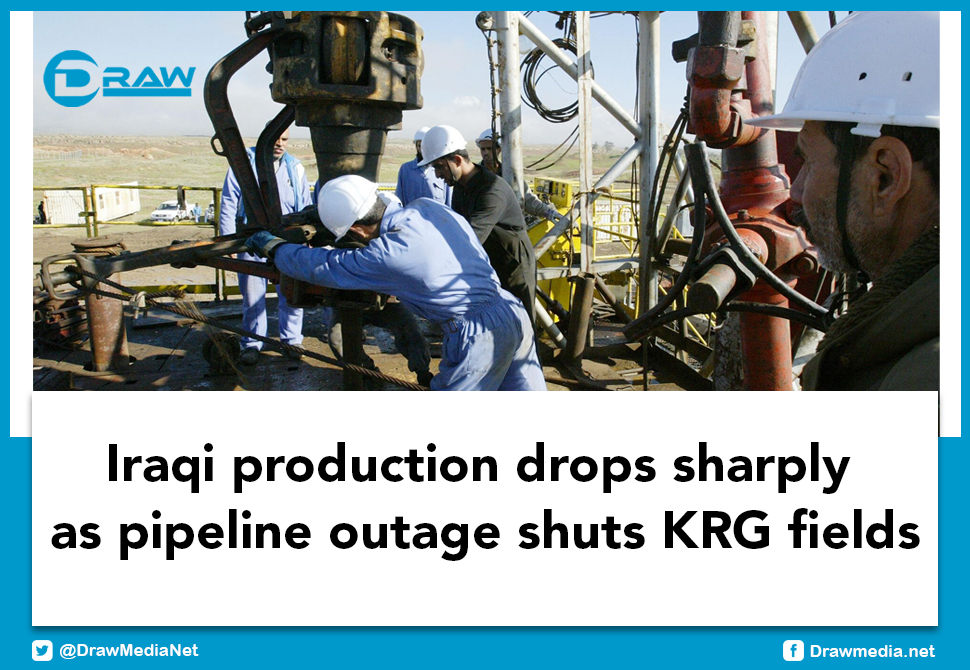
Iraqi production drops sharply as pipeline outage shuts KRG fields

Iraq is developing new production capacity, but output is currently falling because of infrastructure bottlenecks in the south and the prolonged Turkey pipeline shutdown. IRAQ OIL REPORT Iraq’s nationwide crude oil production slumped by 320,000 barrels per day (bpd) in April compared with the previous month, pushed down by a dramatic fall in output from the semi-autonomous Kurdistan Regional Government (KRG), where fields were shut down due to the continued closure of the northern export pipeline through Turkey. Iraq Oil Report calculates national production by gathering data monthly from the country’s producing fields. Federal and KRG production in April combined for an average of 4.30 million bpd, down from 4.63 million bpd in March.* Almost all of the decline came from fields in Iraqi Kurdistan, which have either shut down entirely or throttled back in response to the pipeline outage. KRG production had been averaging over 430,000 bpd over the past year, but it fell below 415,000 bpd in March and down to about 117,000 bpd in April, with output going to domestic refineries.

Read more

Turkey election holds up resumption of northern Iraqi oil exports -sources

Reuters Flows of northern Iraqi crude oil to Turkey's Ceyhan port have not resumed following Baghdad's request to restart them last week, industry and government sources said, as Turkey's government hangs in election limbo. Turkey held presidential elections on Sunday but neither of the two key candidates surpassed the 50% vote threshold and a run-off is scheduled for May 28. Operators at Ceyhan have not even received instructions to prepare for restart of flows, one of the industry sources familiar with the matter added. Three Iraqi government officials blamed the elections for the delay and said Turkey's pipeline operator BOTAS was still waiting for government confirmation. Iraq's oil minister wanted flows to resume on Saturday at a rate of 500,000 barrels per day. Turkey halted flows on March 25 after an arbitration ruling by the International Chamber of Commerce (ICC) ordered Ankara to pay Baghdad damages of $1.5 billion for unauthorized exports by the Kurdistan Regional Government (KRG) between 2014 and 2018. The blocked oil consists mainly of oil originating from Iraq's semi-autonomous Kurdish region.  

Read more

Iraq pockets $7.5 billion in March oil revenue

Ministry of Oil announced the revenues achieved for March. According to the Iraqi Oil Marketing Company "SOMO", the total amount of exports of crude oil amounted to (100) million (913) thousand and (27) barrels with revenues amounting to $7.5 billion, said a statement by the Ministry of Oil. ? Oil revenue last month reached (7 billion 506 million) dollars. ? The amount of oil exports (100 million 913 thousand 27) barrels. ? The average daily oil exports were 3 million 255 thousand barrels. ? The average oil price has reached more than (74.38) dollars per barrel.

Read more

Are new US financial restrictions on Iraq missing their target?

  The latest restrictions are a symptom of increased US-Iran tensions. But as Iraq’s elite find ways around them, ordinary Iraqis are the Hayder Al-Shakeri Iraq has once again been hit by US financial restrictions, this time aimed at restricting specific banks and individuals from trading in the Central Bank of Iraq (CBI)’s daily currency auctions. The timing of these economic measures can in part be attributed to increased tensions between the US and Iran, that are once again being played out in Iraq. However, the elites targeted by the sanctions are finding ways around them, while the real impact is being felt by ordinary Iraqis, whose lives are made even more difficult as currency fluctuations make essential goods, like food and medicine, more expensive and less accessible.  What has happened? Banks such as Asia Islamic Bank, Al-Sharq Al-Awsat, Al-Ansari Islamic Bank and Al-Qabith Islamic Bank have long used CBI’s daily currency auction to gain US dollars and launder money. In fact, the governor of CBI once admitted that a majority of the money is going to neighbouring countries such as Iran via electronic transfers, often with fake invoices. These banks are also backed by political figures and are deeply entrenched in Iraq’s political elite and armed factions, and some of their partners have been targets of US sanctions in the past. Washington is demonstrating its discomfort by flexing its economic muscle, warning Baghdad not to stray too far in the wrong direction. As part of a larger set of demands by Washington, in November 2022 the CBI started banning several of these banks from dealing in US dollars. Security forces added to the pressure by arresting or fining employees at currency exchange offices selling at black market rates, leading to the majority of exchange offices ceasing to sell US dollars. These restrictions have had a significant impact: in October 2022, Iraq sold up to $260 million daily, but that had dropped to around $43 million by January 2023. Why now? These currency auctions have been a haven for illicit financial transactions for over a decade, so why has the US decided to clamp down now? Some experts argue the restrictions are linked to when Iraq joined the international electronic banking system in November 2022. But exposing Iraq’s financial procedures to international scrutiny also revealed transactions linked to Iranian-affiliated trading houses which divert the cash back to Iran or its allies across the region, rekindling the US-Iran dispute. As early as 2018, the US reported that some Iraqi banks were linked to parties that diverted the money to Iran or for Iran throughout the region, and it threatened to impose sanctions as far back as 2020. Any future sanctions must be based on an in-depth understanding of Iraq’s complex political dynamics. The political element of these new restrictions relates to emerging dynamics in Baghdad. Unlike his predecessor, Iraq’s new prime minister, Mohammed Shia al-Sudani, is backed primarily by a network of Shia leaders, some of whom are US-designated terrorists and allies of Iran. Washington is therefore demonstrating its discomfort by flexing its economic muscle, warning Baghdad not to stray too far in the wrong direction. Iraq’s people are the ultimate victims Iraq’s elites have quickly found ways around these restrictions. Blocking international transactions have not prevented the majority of funds from being smuggled to neighbouring countries, either through exchange offices or in cash over Iraq’s borders. Despite threats from security services, exchange offices in Baghdad, supported by political elites and parties, continue to purchase US dollars on their behalf. Exchange offices are only one part of a complex system – including federal government contracts, border checkpoints and other official bodies – that helps finance these political parties and their backers to the tune of up to $300 million per day. Instead of hitting their intended targets, the absence of a comprehensive strategy means these US restrictions have impacted the everyday lives of Iraqi citizens by driving up exchange rates, leading to protests. While most Iraqis are paid in the Iraqi dinar, many essential goods are priced based on the value of the US dollar, making them unaffordable for many people In the health sector, officials have said currency fluctuations have made it impossible to regulate the price of medicine. The increased cost has forced people to seek out counterfeit or expired medication at cheaper prices, at significant risk to their health. The restricted revenue in Iraqi dinars and increasing material prices in US dollars has also impacted the livelihoods of many farmers, forcing 3,000 poultry farms to close. To meet demand, Iraq will soon be forced to import more meat and vegetables at higher prices. But these fluctuations do not affect everyone equally. In March 2023, ordinary Iraqis were forced to pay a black-market rate for US dollars more than 17.5 per cent above the official rate. Meanwhile, the elites had access to the CBI’s currency auction via their banks and exchange offices, enabling them to purchase US dollars at official rates while keeping the inflated rates in the black market. This demonstrates the ability of Iraq’s political elites to not only circumvent the restrictions but benefit from them. Any future sanctions must be based on an in-depth understanding of Iraq’s complex political dynamics or they will primarily harm the most vulnerable, while the intended targets escape largely unscathed. 

Read more

Iraqi PM makes ministerial changes

Draw Media "Five to six ministers to be replaced" Iraqi PM Mohammed Shia' al-Sudani will make ministerial changes in the first six months of his cabinet. Due to poor performance of a number of ministers, Sudani has decided to replace five to six ministers who do not perform their duties properly. Meanwhile, the United States has comments on several ministers, including the minister of higher education, who belongs to the Ahl al-Haq group, and the minister of social affairs, who belongs to the Jundul Imam group

Read more

All Contents are reserved by Draw media.
Developed by Smarthand